Understanding the Supply Chain Management Process
An overview of the supply-chain management process
Gartner, McKinsey and Deloitte publish the findings. We read the full report and turn each one into the process to change, the number to watch, and the software that runs it. That holds whether you run one warehouse on spreadsheets or a multi-site operation on an existing ERP.
Get the next one by email
Each issue, each report and each post falls into one of these. If none of them is your problem, the newsletter is not for you, and we would rather you knew now.
Gartner, McKinsey, Deloitte, Capgemini and Bain publish the findings. We read the full report and say what the number means for your operation, and what to do about it.
One challenge at a time: the mechanism behind it, the process that fixes it, and the tooling that keeps it fixed. Six industries so far.
What runs in production today, from monitoring agents to forecasting models, and what is still a demo. We run both, so we can tell the difference.
Forecast value added, champion models, consensus cycles and replenishment. Methods you can test against your own history before you trust them.
Where an accounting package, a marketplace, a carrier and a spreadsheet meet, and what a harmonised data model changes about that meeting.
Decisions we made and what they cost us. Where a different product is the better choice. We are not neutral, and we say so.
A survey tells you what happened elsewhere. A report of ours tells you what to change here, in what order, and which number shows that it worked. This is the translation we do every time.
Every statistic we quote carries a named, published source. Where we could not verify a figure against the original publication, we left it out and made the point without a number.
A survey result is not an instruction. We work out what the finding means for the operation in front of us, then write the process as steps a team can run, with the numbers to watch.
Most of the process is configuration on the platform. For the part that is specific to you, our consulting team builds it with you, on the platform or against the systems you already run.
McKinsey, 2023 Supply Chain Pulse Survey
78% of companies increased inventory buffers, and 78% pursued dual sourcing for critical materials.
Both are cash-expensive answers to a parameter problem. A buffer covers a lead time nobody measured.
Build the real lead time per supplier from purchase order history. Set the reorder point from that number, not from memory. Put a second supplier against every critical part. Review quarterly.
Supplier lead times, minimum order quantities and scorecards built from PO history. Purchase orders raised automatically at the reorder point.
Manufacturing reportGartner forecast, 2024
More than 70% of recent ERP initiatives will fail to fully meet their original business case goals by 2027.
The business case fails because the project tries to replace everything at once. The process that costs the most money is usually one process.
Name the one process that loses the most margin. Fix that process first, on a system that integrates with the accounting package and the channels you keep. Measure before and after. Then pick the next one.
One system across procurement, stock and planning that sits alongside Xero, Sage, QuickBooks or an existing ERP, rather than replacing it.
Retail reportNational Retail Federation and Happy Returns, 2025
19.3% of online sales are expected to be returned in 2025.
A return is not one event. It is an authorisation, an inbound shipment, an inspection, a stock decision, a refund and a ledger entry. Most teams run that on email.
Treat the return as its own lifecycle with the same states every time. Decide the stock outcome at inspection, not at refund. Post the refund and the stock movement from the same record.
Returns handling wired into stock and refunds, with each return a record in the same order lifecycle as the sale.
eCommerce reportOne report per industry: what goes wrong, why, what the research says, and what to do about it. Each one names the conditions in which a different product is the better choice. All six are free.
Cargopilot is a supply chain and automation platform: forecasting, procurement, inventory, manufacturing, logistics and reporting in one data model. It has run in production since March 2025.
The same team does the consulting. We map the process with you, build the workflow or the connector that is specific to your operation, tune the forecasting models against your history, and train the people who run it.
That order matters. We advise on the process first, and then supply the software that runs it. Where a different product is the better choice, the report says so.
Talk to the consulting teamMethods you can apply on Monday, numbers from our own data with the basis shown, and decisions we made and what they cost us.
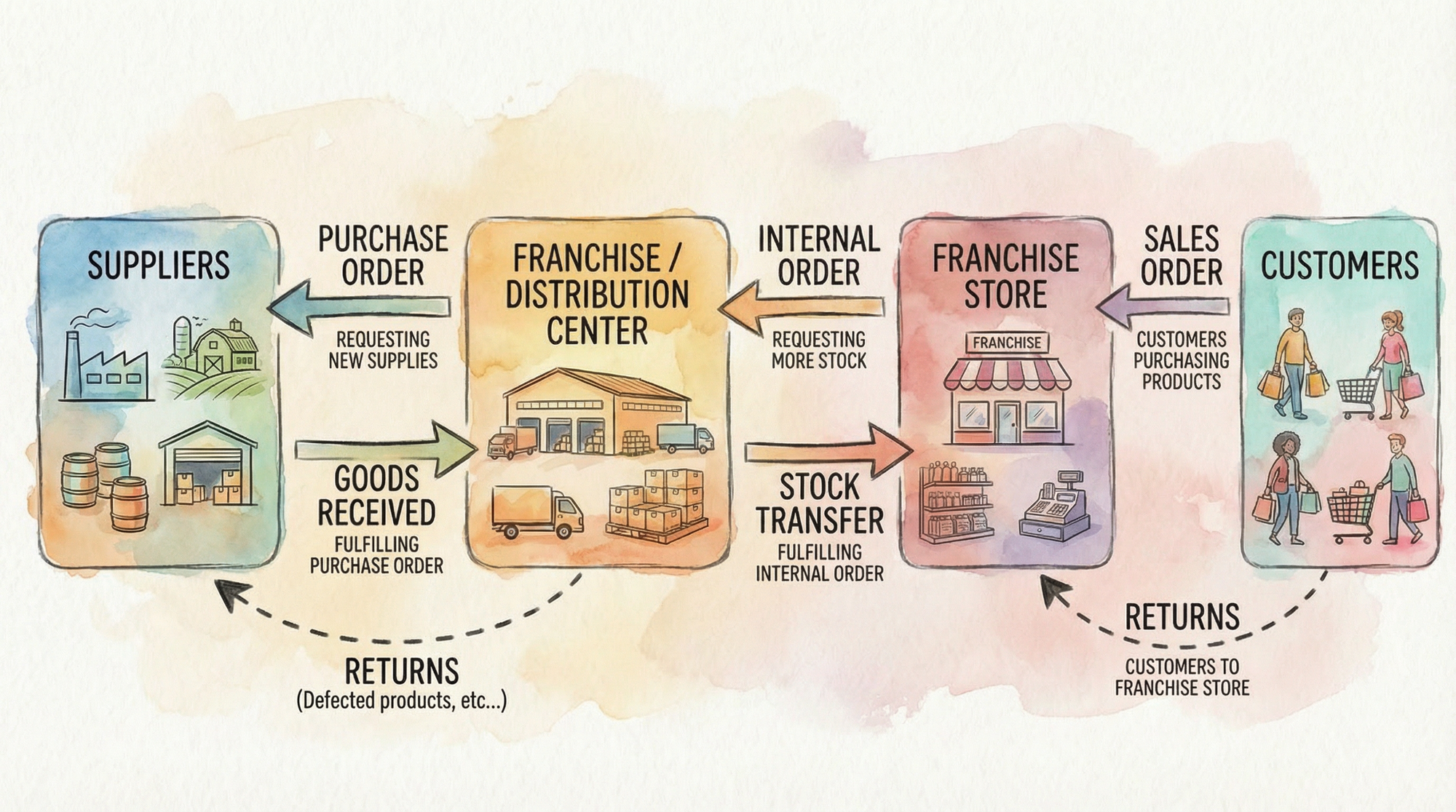
An overview of the supply-chain management process
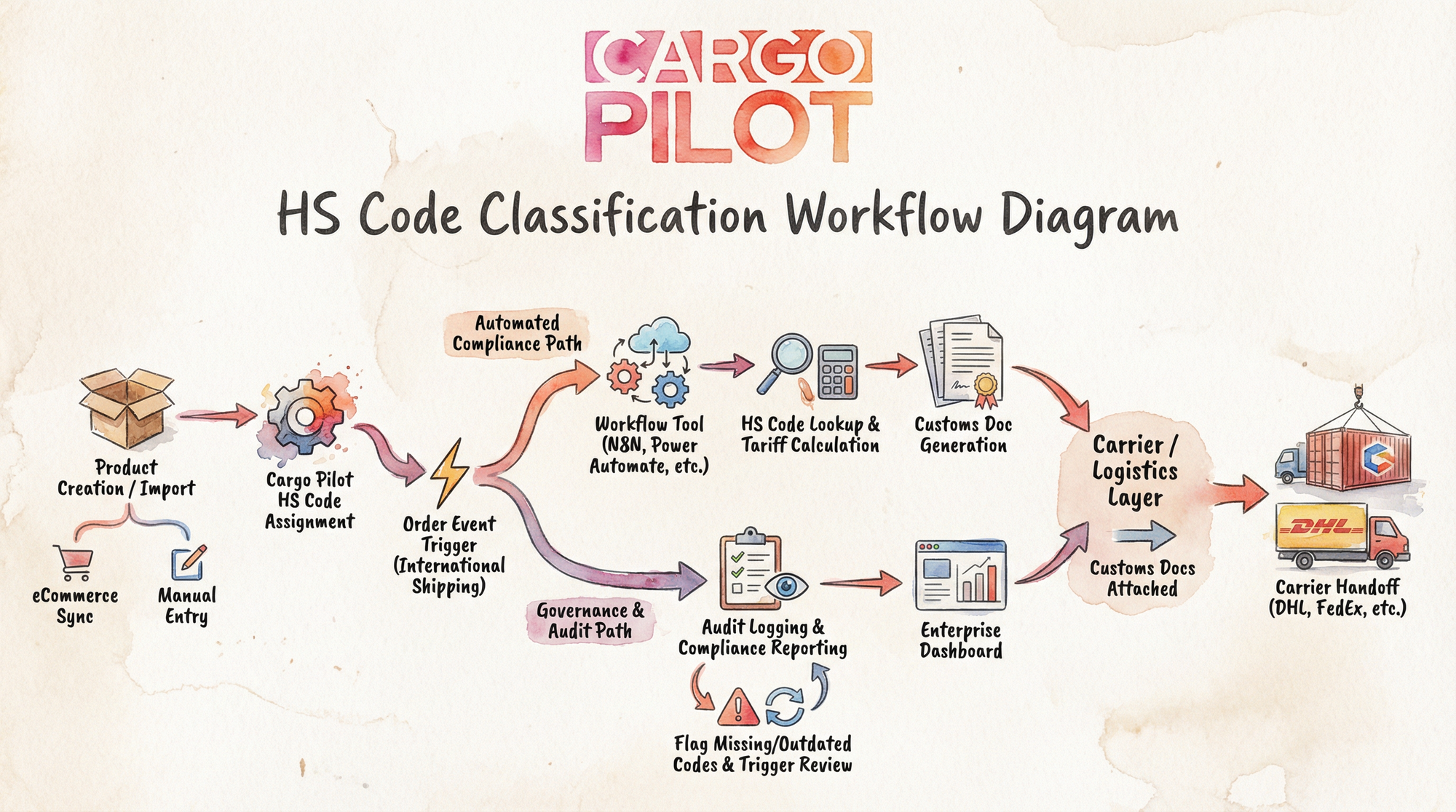
The Hidden Risk in Your International Supply Chain
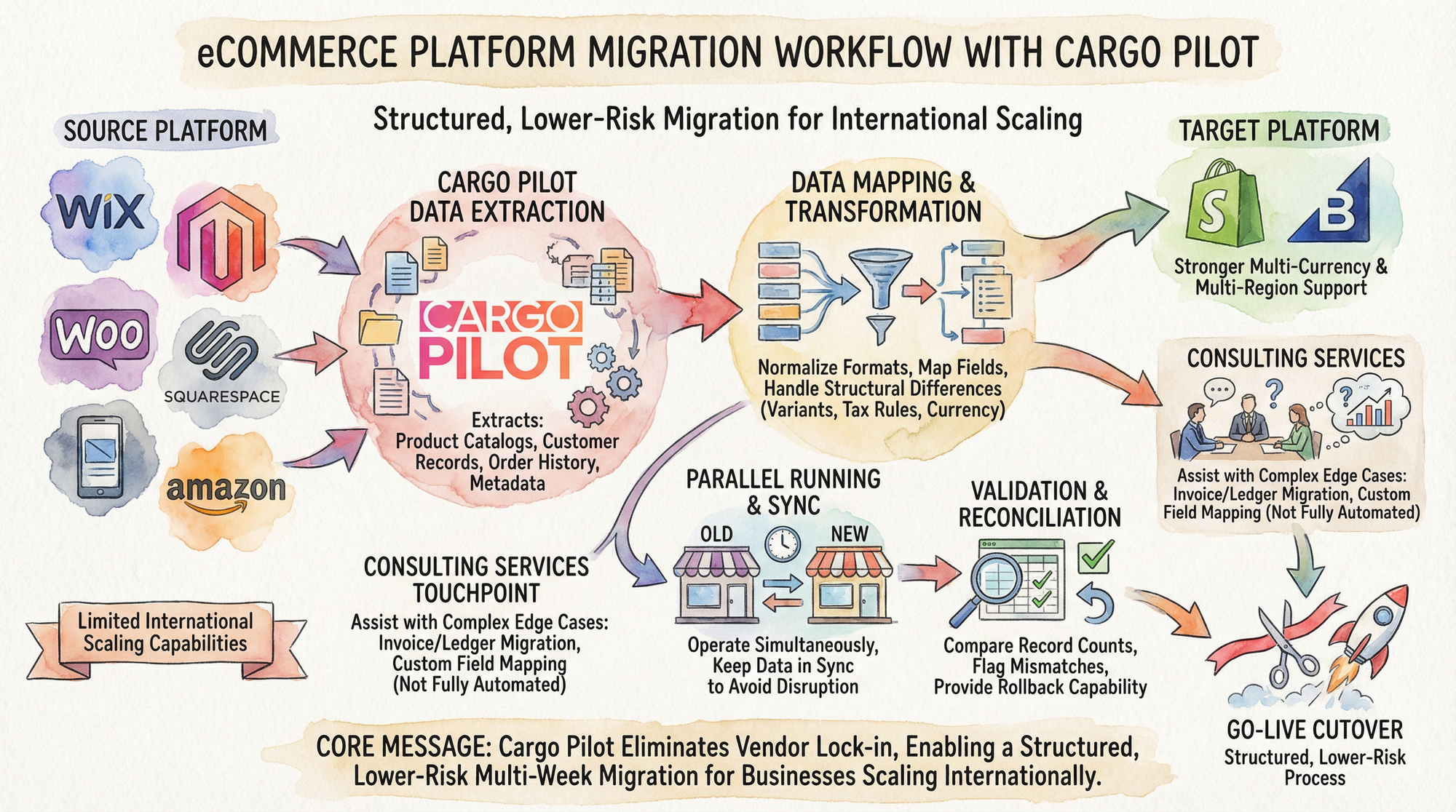
eCommerce Migrations don't have to be a nightmare. Avoid vendor lock-in with Cargo Pilot
What the analysts found, what it means for an operation your size, and one thing you can change. No product tour.